


Essential Quilt Making Basics for Beginners
When people discover I am a quilter, they often say, "I've always wanted to try that, but I didn't know where to begin. I have a sewing machine and some fabric—what's the next step?" Does this sound familiar? I felt the same way! Although I don't know everything, I've learned a lot—mostly from my mistakes—and I want to share my experiences with you. You CAN do it; it's NOT impossible or too difficult, and your finished product—brace yourself—will never be perfect.
When I was younger, I worked in construction with my family. The most fundamental thing a house or building needs is a strong foundation. These upcoming blog posts will help you establish that foundation and transform your fabric into a quilt that you or a loved one will cherish forever. The first step: the tools and materials you need to succeed.
This post does contain some affiliate links.
Getting Started: Your Quilt Making Guide to Tools and Materials
Before you start stitching away, you need to gather your quilting toolkit. Think of it as your building supplies— without it, your quilting powers won’t shine!
Let’s get you all set for your quilting adventure! Here’s a checklist of what you’ll need:
Fabric: Cotton quilting fabric is your best friend here! It's easy to work with and comes in a delightful array of patterns and colors. If you want to mix things up without committing to large pieces, a fat quarter bundle is a fantastic choice.
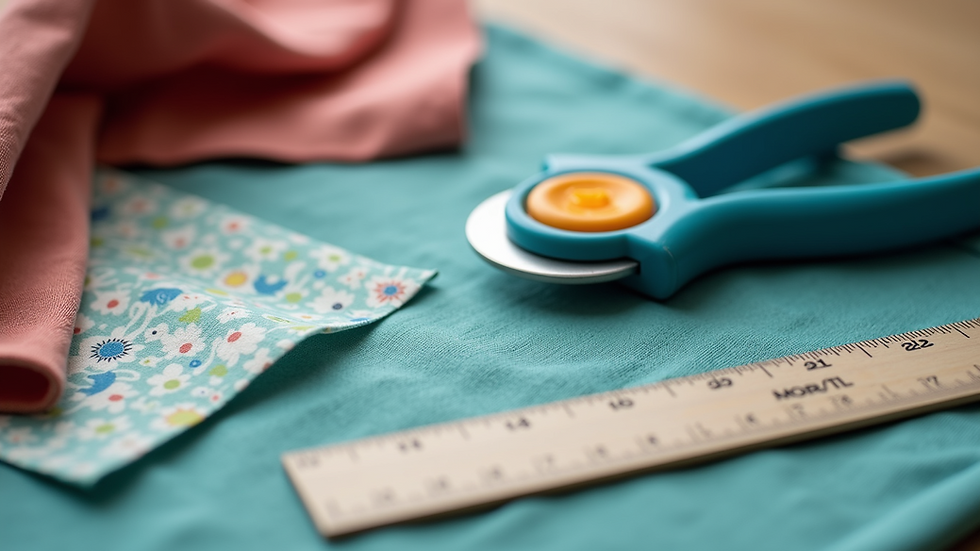
Rotary Cutter and Mat: Trust me, these tools will change your game! They make cutting fabric quick and precise. Once you try a rotary cutter, you might find your scissors gathering dust!
Quilting Ruler: A clear acrylic ruler with grid lines is a must-have for measuring and cutting straight edges. A long ruler, like a 6 1/2 x 24, is particularly handy for cutting yardage. And don’t forget square rulers with diagonal lines to ensure your blocks stay nice and square after sewing!
Sewing Machine: You’ll want a reliable machine that offers a straight stitch and a zigzag stitch (great for applique!). A quarter-inch specialty foot is super helpful too, and many machines designed for quilting come with one.
Thread: Choose a high-quality thread that matches or complements your fabric. Keep in mind that thread can weaken over time, especially if it’s exposed to sunlight or dry conditions. Try the 'snap test'—hold the thread in each hand and snap it. If it breaks, it’s time to say goodbye!
Pins and Needles: Look for quilting pins, which are longer and thinner than regular pins, making them perfect for holding multiple layers together. Flat head pins are easy to slide in and out, while glass-head pins can even handle a little heat from the iron.
Iron and Ironing Board: Pressing your fabric and seams is key to achieving a polished finish. A good iron will be your best ally!
With these essentials in hand, you’re all set to embark on your quilting journey! Remember, having the right tools not only makes the process smoother but also adds to the joy of creating something beautiful.
Some of my favorite places to buy my supplies -
Fat Quarter Shop has an AMAZING array of fabric. From basics to batiks, you can always find what you're looking for at really great prices. You can also get some super cute notions and rulers that you can't find anywhere else.
Sewing Parts Online has some of the best deals on machines and machine accessories for sewing, quilting and embroidery. Their customer service is great and shipping is quick!
Sulky threads and stabilizers are the best. As a longarmer and machine embroiderer, I have used a lot of different threads, and their poly threads are my personal favorite for both of these.
Tune in next time and let's get to making something! Drop me a line and let me know if there's something in particular that you want to learn!
Peace, Love, and Quilts,
MeLinda


Comments